

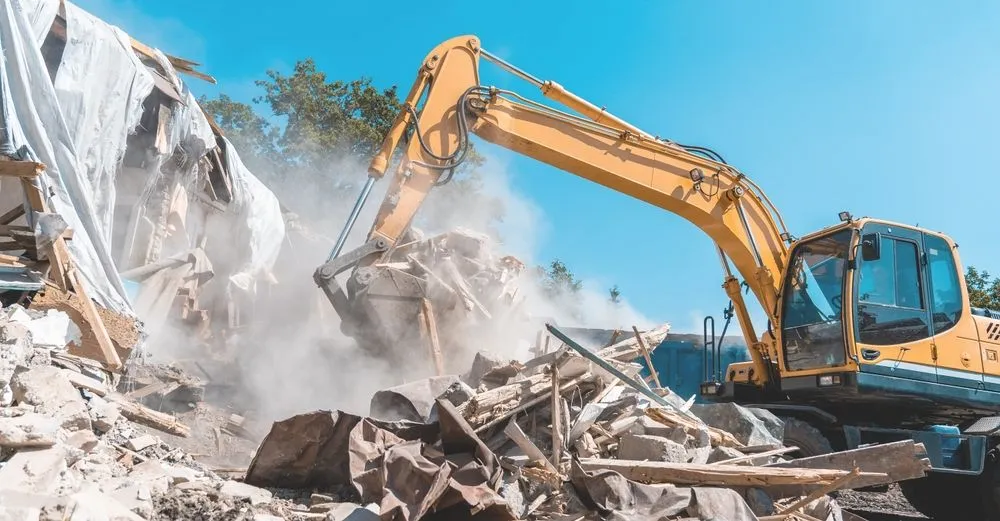
Demolition work has changed a lot in recent years, especially in places like Delaware County (often called DelCo). What used to rely mostly on manual labor and basic machinery is now supported by advanced tools, smart systems, and data-driven planning. These improvements are not just about speed or efficiency—they are mainly about safety.
Today, safe demolition practices in DelCo are strongly influenced by technology that helps reduce risks, protect workers, and prevent damage to nearby structures. From digital mapping tools to smart heavy equipment, technology plays a central role in making demolition safer and more predictable.
In a densely built region like DelCo, where residential, commercial, and industrial buildings often sit close together, precision is extremely important. Even a small mistake can lead to serious consequences. That is why contractors now rely on modern systems that help them plan, monitor, and execute demolition projects with much greater accuracy than in the past.
This article explores how different technologies are shaping safe demolition practices in DelCo and why these innovations are becoming essential in modern construction and redevelopment projects.
Role of Modern Demolition Technology in DelCo Safety
One of the biggest improvements in demolition work is the introduction of advanced technology that supports safer operations from start to finish. In DelCo, contractors now use digital tools to reduce guesswork and improve decision-making on job sites.
Laser scanning, drone imaging, and 3D modeling systems allow teams to understand a structure in detail before any physical work begins. These tools create highly accurate digital representations of buildings, helping engineers identify weak points, hazardous materials, and structural risks. This directly improves safe demolition practices in DelCo by allowing better planning before the first wall is taken down.
Another important advancement is Building Information Modeling (BIM). BIM helps contractors visualize the entire structure and its surroundings in a digital format. This allows teams to simulate different demolition approaches and choose the safest and most efficient method.
Technology also improves communication between teams. Cloud-based systems let engineers, site managers, and safety inspectors share real-time updates. This reduces misunderstandings and ensures everyone is working with the same information.
In short, modern demolition technology is not just a support tool—it is now a core part of ensuring safety, especially in complex urban environments like DelCo.
Site Assessment and Planning with Digital Tools
Before any demolition begins, proper site assessment is essential. In the past, this process relied heavily on manual inspections, which could sometimes miss hidden risks. Today, digital tools have transformed how assessments are done, making safe demolition practices in DelCo more reliable and data-driven.
One of the most important tools used today is drone surveying. Drones can quickly capture high-resolution images of large sites, including rooftops and hard-to-reach areas. These images help engineers evaluate the structure from multiple angles without putting workers at risk.
Ground-penetrating radar (GPR) is another useful technology. It helps detect underground utilities such as gas lines, water pipes, and electrical cables. Identifying these hidden systems is critical because damaging them during demolition can cause serious accidents.
In addition, thermal imaging cameras are sometimes used to identify heat signatures and hidden structural weaknesses. This is especially useful in older buildings where internal damage may not be visible from the outside.
Once all data is collected, software systems combine it into a detailed demolition plan. This plan outlines step-by-step procedures, identifies potential hazards, and assigns safety measures. Because everything is based on real data, the chances of unexpected problems are greatly reduced.
These digital tools make planning more accurate, efficient, and safe, which is why they are now a key part of safe demolition practices in DelCo.
Heavy Machinery Innovations Enhancing Controlled Demolition
Heavy machinery has always been central to demolition work, but recent technological upgrades have made these machines much safer and more precise. In DelCo, modern demolition equipment is now equipped with advanced control systems that improve both safety and performance.
Remote-controlled machinery is one of the most important innovations. Operators can control excavators, wrecking balls, and robotic demolition machines from a safe distance. This reduces the risk of injury in dangerous environments, especially when working with unstable structures.
Hydraulic systems have also become more advanced, allowing for smoother and more controlled movements. This is especially important when working in tight urban areas where nearby buildings must be protected. Controlled force application ensures that only the intended parts of a structure are removed.
Some machines now include GPS tracking and onboard sensors that provide real-time feedback. These systems help operators understand pressure levels, angles, and structural resistance during demolition. If something seems unsafe, the system can alert the operator immediately.
Robotic demolition tools are also becoming more common in confined spaces. These compact machines can enter buildings that are too dangerous for humans, reducing risk while maintaining precision.
All these advancements contribute directly to safe demolition practices in DelCo by ensuring that heavy machinery is not only powerful but also intelligent and responsive.
Environmental Monitoring and Dust Control Systems
Demolition is not just about tearing down structures—it also involves managing environmental impact. Dust, debris, noise, and air quality are major concerns, especially in populated areas like DelCo. Technology now plays a major role in controlling these factors and improving overall safety.
Dust suppression systems are widely used on demolition sites. These systems use water sprays and misting technology to reduce airborne particles. Some advanced systems automatically adjust water output based on dust levels detected in the air.
Air quality sensors are also installed around job sites to continuously monitor pollution levels. If dust or harmful particles exceed safe limits, alerts are sent to site managers, who can then take immediate action. This helps maintain safe demolition practices in DelCo while protecting workers and nearby residents.
Noise monitoring tools are another important innovation. These devices measure sound levels in real time and ensure that demolition work stays within legal limits. This is especially important in residential neighborhoods where noise pollution can be disruptive.
Environmental tracking software also helps contractors document compliance with local regulations. This data can be shared with authorities to prove that safety and environmental standards are being followed.
By combining these technologies, demolition projects become more environmentally responsible and safer for surrounding communities.
Safety Training, Compliance, and Data-Driven Oversight
Even with advanced technology, human expertise remains essential. That is why training and compliance systems are just as important as machines and software when it comes to safe demolition practices in DelCo.
Virtual reality (VR) training is now being used to prepare demolition workers for real-world scenarios. Workers can practice handling dangerous situations in a simulated environment without any real risk. This improves their skills and confidence before they enter actual job sites.
Digital safety management platforms also help companies track certifications, training records, and safety procedures. This ensures that every worker on a site is properly trained and qualified for their tasks.
Wearable technology is another growing trend. Smart helmets, vests, and wrist devices can monitor worker health indicators such as heart rate, fatigue levels, and exposure to hazardous conditions. If a risk is detected, alerts are sent instantly to supervisors.
Data analytics plays a big role in improving safety over time. By analyzing past demolition projects, companies can identify patterns, common risks, and areas for improvement. This leads to better planning and safer execution in future projects.
Compliance with local regulations is also easier with digital reporting tools. These systems automatically generate safety reports, making it simpler to meet government standards and avoid violations.
Together, these technologies ensure that demolition work in DelCo is not only efficient but also highly controlled and safe for everyone involved.
Conclusion
Technology has completely transformed the way demolition projects are carried out, especially in urban and developing areas like Delaware County. From planning and machinery to environmental control and worker safety, every stage of the process is now supported by advanced tools and systems.
Safe demolition practices in DelCo are no longer based only on experience and manual effort. Instead, they are driven by data, precision, and real-time monitoring. This shift has significantly reduced accidents, improved efficiency, and made demolition work more environmentally responsible.
As technology continues to evolve, the future of demolition will likely become even safer and more intelligent, ensuring better outcomes for workers, communities, and the environment.
