

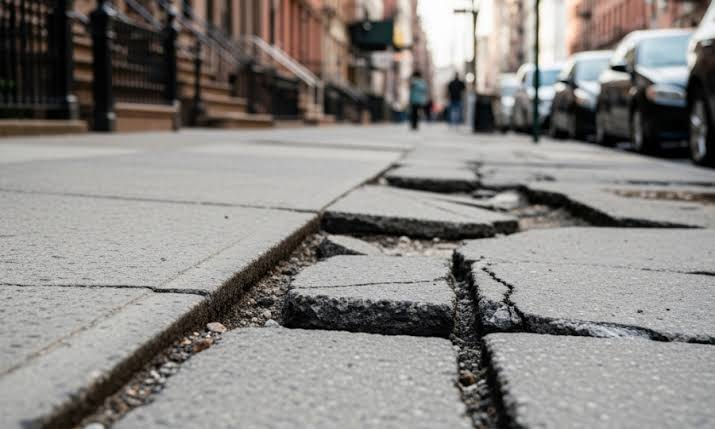
Walking through New York City can be part of everyday life. People walk to work, school, stores, restaurants, subway stations, and other destinations. Most of the time, sidewalks provide a safe path for pedestrians. However, cracked pavement, broken concrete, uneven surfaces, potholes, poor lighting, ice, snow, and other hazards can cause serious accidents.
A sidewalk accident may lead to broken bones, head injuries, back problems, sprains, cuts, or other painful conditions. In more serious cases, a pedestrian may need surgery, physical therapy, or long-term medical care. The financial impact can also be significant when an injured person cannot work while recovering.
If your injury happened because a dangerous sidewalk condition was not properly repaired or maintained, you may have a right to seek compensation. However, sidewalk injury claims can be complicated because responsibility may depend on the location of the sidewalk, the type of hazard, property ownership, maintenance duties, notice of the dangerous condition, and New York law.
A New York sidewalk injury attorney can review the facts of your accident, identify potentially responsible parties, collect evidence, and help you pursue the compensation you may deserve. Understanding how these claims work can help you make informed decisions after a pedestrian accident.
Understanding New York Sidewalk Injury Claims
A sidewalk injury claim generally involves an accident caused by an unsafe condition on a walkway. The hazard may include a large crack, raised section of concrete, missing pavement, broken curb, pothole, slippery surface, or another condition that creates an unreasonable risk to pedestrians. Weather-related hazards, such as ice or snow, can also create difficult legal questions.
One of the most important issues is determining who was responsible for the sidewalk. Many people assume that the city is automatically responsible whenever someone is hurt on a public sidewalk. That is not always the case. Depending on the location and circumstances, responsibility may involve a municipality, property owner, commercial landlord, tenant, contractor, or another party.
New York sidewalk law can be especially important in these cases. Certain property owners may have duties to maintain sidewalks next to their properties. Municipal liability may also involve specific legal requirements and notice rules. This means an injured pedestrian often needs more than proof that a sidewalk was damaged. The claim may require evidence showing who had a legal duty to maintain the area and whether that duty was breached.
A New York sidewalk injury attorney can investigate these questions before you make important decisions about your claim. The attorney may examine property records, maintenance responsibilities, photographs, inspection information, prior complaints, accident reports, and other available evidence.
The nature of the accident also matters. A person who trips over a raised sidewalk slab may have a different claim from someone who slips on untreated ice. The timing of the accident, weather conditions, prior complaints, and efforts to repair the hazard can all affect the case.
Because sidewalk accidents can involve several legal issues at once, early investigation is valuable. Evidence may become harder to locate as time passes. Photographs may disappear, witnesses may become difficult to contact, and dangerous conditions may be repaired before they can be documented.
For this reason, injured pedestrians should take reasonable steps to preserve evidence whenever possible. Photographs of the sidewalk condition, the surrounding area, footwear, clothing, visible injuries, and other relevant details can help establish what happened. Medical records can also provide important evidence connecting the accident to the injuries.
How a New York Sidewalk Injury Attorney Investigates Your Case
A strong sidewalk accident claim begins with a careful investigation. An attorney does not simply rely on the injured person’s memory. The goal is to build a complete picture of the accident and determine how the dangerous condition developed and who may have been responsible for it.
A New York sidewalk injury attorney may begin by discussing the accident with you in detail. This can include the exact location, date and time, weather conditions, direction of travel, appearance of the sidewalk, nature of the fall, and events immediately after the accident. Even small details may become important when determining liability.
Photographic evidence can be particularly useful. Pictures can show the size and appearance of a crack, height difference, hole, broken pavement, obstruction, or other hazard. Images of the surrounding buildings and property lines may also help identify who was responsible for the area.
Witnesses can provide another valuable source of evidence. Someone who saw the fall may explain how the accident happened. A nearby worker, resident, business owner, or pedestrian may also know whether the dangerous condition existed before the accident.
An attorney may also investigate whether complaints or repair requests were previously made about the sidewalk. Evidence that a responsible party knew about a dangerous condition can be important in establishing a negligence claim. In some cases, records may show that the condition existed for a substantial period before the accident.
The investigation may also involve reviewing municipal records and property information. Determining ownership and maintenance obligations can be complicated, especially in areas with multiple buildings, businesses, landlords, tenants, and public spaces.
Medical evidence is another major part of the investigation. A lawyer may collect medical records, diagnostic reports, treatment information, bills, and other documentation related to the injury. These records can help demonstrate the seriousness of the condition and the costs associated with recovery.
A sidewalk injury lawyer may also work with medical professionals or other experts when appropriate. Expert testimony can sometimes help explain the severity of an injury, future medical needs, or technical issues involving the sidewalk condition.
The purpose of this investigation is not simply to prove that you fell. It is to establish the legal elements needed to support a claim. This may include showing that a dangerous condition existed, that a responsible party had a duty regarding the condition, that the party knew or should have known about the hazard, and that the condition contributed to the injury.
What Compensation May Be Available After a Sidewalk Accident
A serious sidewalk accident can affect almost every part of a person’s life. Medical treatment may create immediate expenses, while lost income and long-term physical limitations can create additional financial pressure. Compensation in a successful personal injury claim may address several categories of losses.
Medical expenses are often one of the first concerns after a pedestrian injury. Depending on the severity of the accident, treatment may include emergency care, hospital services, diagnostic tests, medication, surgery, rehabilitation, physical therapy, and follow-up appointments.
A New York sidewalk injury attorney can help document these expenses and evaluate how the injury may affect your future medical needs. Some injuries require ongoing care even after the initial treatment ends. A claim may need to account for reasonably expected future medical costs when supported by the available evidence.
Lost wages can also be significant. If your injuries prevent you from working, you may lose income during your recovery. Serious injuries may affect your ability to perform your usual job for months or longer. In some cases, an injury can reduce a person’s future earning capacity.
A personal injury claim may also involve non-economic damages. These can include physical pain, emotional distress, loss of enjoyment of life, and other effects associated with the injury. The value of these damages can depend on the nature and severity of the injury and its impact on daily life.
For example, a minor injury that heals quickly may have a very different value from a serious fracture that requires surgery and months of rehabilitation. A traumatic brain injury, spinal injury, or permanent disability may create lasting challenges that require careful evaluation.
Insurance coverage can add another layer of complexity. An insurance company may investigate the accident and evaluate whether it believes its insured party is responsible. The insurer’s financial interests are not necessarily the same as yours. An initial settlement offer may not fully account for future medical treatment, lost income, or the full impact of the injury.
This is one reason it can be helpful to understand the potential value of your claim before accepting a settlement. Once certain claims are resolved, it may be difficult or impossible to seek additional compensation later.
A New York sidewalk injury attorney can review the available evidence and help estimate the damages connected to the accident. The attorney can also communicate with insurance companies and work toward a resolution that reflects the documented losses.
However, every injury case is different. There is no guaranteed settlement amount. The final value of a claim depends on factors such as liability, medical evidence, injury severity, financial losses, insurance coverage, and the strength of the available proof.
Why Liability and New York Deadlines Matter
Proving liability is often the most challenging part of a sidewalk injury case. A person may clearly have been injured, but the law may still require proof that another party was legally responsible for the dangerous condition.
Negligence generally involves a failure to use reasonable care when a legal duty exists. In a sidewalk case, the specific duty may depend on who owned, controlled, repaired, or maintained the property and what New York law requires in that situation.
Notice can also be important. A claim may involve questions about whether the responsible party knew about the dangerous condition or whether the condition existed long enough that the party should reasonably have discovered it.
For example, if a sidewalk defect appeared only moments before an accident, proving that a property owner had enough opportunity to discover and correct it could be difficult. On the other hand, evidence of repeated complaints or a long-standing defect may provide stronger support for a negligence claim.
Comparative fault may also become an issue. A defendant or insurance company could argue that the injured person was partly responsible for the accident. They might claim that the pedestrian was distracted, failed to watch where they were walking, or otherwise contributed to the fall. How such arguments affect a claim depends on the facts and applicable New York law.
Another critical issue is the deadline for bringing a lawsuit. New York personal injury claims are subject to statutes of limitations, but special rules can apply when a government entity is involved. Claims against municipalities may have additional notice and procedural requirements that are different from ordinary claims against private parties.
Because these deadlines can be strict, waiting too long can put your legal rights at risk. An injured pedestrian should not assume that having medical records or photographs automatically preserves a claim.
A New York sidewalk injury attorney can review the accident date, location, potentially responsible parties, and applicable legal deadlines. This can help prevent avoidable procedural problems.
The legal process may involve settlement negotiations, insurance communications, document exchange, and potentially litigation. Many injury claims are resolved through negotiation, but filing a lawsuit may become necessary when the parties cannot reach a fair agreement.
Having legal representation can also reduce the burden on an injured person. Instead of handling every insurance communication alone, the attorney can manage many legal aspects of the claim while the injured person focuses on medical treatment and recovery.
Choosing the Right New York Sidewalk Injury Attorney
Choosing an attorney after a sidewalk accident is an important decision. You want someone who understands New York personal injury law and has experience handling cases involving pedestrian injuries, premises liability, sidewalk defects, and negligence.
During an initial consultation, it can be useful to discuss how the attorney would investigate your accident. Ask whether the firm handles sidewalk injury cases and whether it has experience identifying responsible property owners, municipalities, or other parties.
Communication also matters. A good attorney should explain complicated legal concepts in clear language and help you understand what is happening with your claim. You should know how to contact the legal team and what information they need from you.
Experience with insurance negotiations can also be valuable. Insurance companies often have experienced claims professionals and attorneys working on their side. An experienced personal injury lawyer can help protect your interests during negotiations and identify issues that could affect the value of your claim.
It is also important to understand the attorney’s fee arrangement before moving forward. Many personal injury attorneys work on a contingency fee basis, meaning the lawyer generally receives a fee from the recovery rather than requiring an upfront payment. The exact terms can vary, so the fee agreement should be reviewed carefully.
A strong attorney-client relationship depends on trust, communication, preparation, and realistic expectations. No lawyer can guarantee a particular outcome. However, an attorney can provide legal guidance, investigate the facts, explain your options, and advocate for your interests.
If you have been hurt because of a dangerous sidewalk condition, consider documenting the accident as soon as possible. Keep copies of medical bills and records, photograph the accident location if it is safe to do so, save relevant correspondence, and avoid making statements that could unnecessarily harm your claim.
You should also follow your healthcare provider’s treatment recommendations. Gaps in medical care can sometimes make it more difficult to demonstrate the connection between an accident and an injury. Keeping a simple record of appointments, symptoms, treatment, and how the injury affects daily activities may also help organize your information.
Most importantly, do not assume that a sidewalk accident is too minor to discuss with a lawyer or too complicated to pursue. A short legal consultation can help you understand whether you may have a viable claim and what steps should be taken next.
Conclusion
A sidewalk accident can turn an ordinary walk into a stressful and expensive experience. Medical bills, lost wages, pain, and uncertainty about who is responsible can make recovery even harder. When a dangerous sidewalk condition causes an injury, understanding your legal rights is an important part of protecting your future.
A New York sidewalk injury attorney can investigate the accident, determine potentially responsible parties, gather evidence, evaluate your damages, communicate with insurers, and pursue compensation through negotiation or litigation when appropriate. The attorney can also help you understand important New York laws, liability rules, and filing deadlines.
Every sidewalk injury case is different, and the outcome depends on the facts and evidence. If you have been injured on a dangerous sidewalk, taking action early can help preserve important evidence and protect your legal options. With the right legal guidance, you can focus on your recovery while your attorney works to pursue the compensation you may be entitled to receive.
