

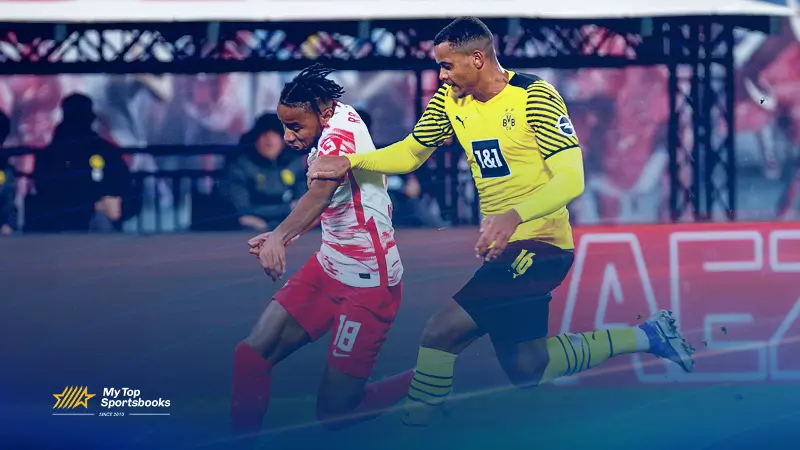
Some Bundesliga fixtures unfold at a speed that reshapes probabilities minute by minute. These are not merely entertaining matches; they are structurally volatile contests where tempo, transitions, and decision-making accelerate faster than in-play markets can always adjust. Understanding why certain pairings consistently produce high-speed football allows live readers to focus on matchups where information emerges quickly and repeatedly.
Why Tempo Matters More Than Quality in Live Contexts
In live reading, tempo dictates how often probabilities are stress-tested. High-speed matches compress time between events, forcing rapid defensive recovery and quick attacking decisions. The cause is mutual commitment to pressing or vertical play. The outcome is frequent swings in territorial control. The impact is that live lines must constantly recalibrate, increasing the chance of short-lived inefficiencies when pace outruns pricing logic.
Tactical Pairings That Naturally Produce Fast Games
Not all fast matches come from strong teams. Tempo spikes most reliably when both sides share compatible risk profiles. A high press facing direct build-up, or two transition-focused teams meeting in midfield, creates constant forward momentum. The cause is stylistic symmetry. The outcome is reduced settling phases. The impact is that matches reach decisive moments earlier and more often.
Transition Density as the Core Driver of Speed
Fast games are defined less by possession changes than by transition density. When teams attack immediately after regaining the ball, sequences shorten and defensive lines are repeatedly unbalanced. The cause is coaching emphasis on first-pass progression. The outcome is repeated entries into dangerous zones. The impact is sustained volatility rather than isolated bursts.
How failed presses accelerate match rhythm
When pressing is frequent but imperfect, the ball bypasses the first line often. This creates running duels instead of set defenses. Over time, fatigue compounds and spacing widens, increasing the speed and openness of the contest rather than stabilizing it.
Bundesliga Teams Often Involved in High-Speed Matchups
Certain teams repeatedly feature in fast-paced fixtures due to their non-negotiable styles. RB Leipzig maintain aggressive pressing and vertical attacks that compress match phases. Borussia Dortmund accelerate games through wide speed and early forward passing. Bayer Leverkusen sustain high attacking lines, while Eintracht Frankfurt thrive in open, transitional exchanges.
These teams are not always dominant, but their matches rarely slow down naturally.
Live Signals That Confirm a Match Is Truly Fast
Early impressions can mislead. A match feels fast only when tempo sustains beyond the opening minutes. The most reliable confirmation comes from repeated structural cues rather than isolated sprints or chances.
Before listing these cues, it is important to understand that speed becomes analytically valuable only when it is repeatable across multiple phases of play, not when it spikes briefly.
Indicators that a fast game state is sustainable:
- Both teams commit at least five players ahead of the ball during attacks
- Defensive lines reset high rather than dropping after clearances
- Midfield duels occur in open space rather than compact blocks
- Goalkeepers distribute quickly instead of slowing restarts
These indicators suggest that neither side is seeking control. When they persist together, the match is structurally suited to live interpretation rather than patient observation.
Reading Live Markets in High-Tempo Fixtures
From a live game reading perspective, fast matches expose a gap between visual rhythm and numerical adjustment. When tempo stays high after goals or near-misses, underlying pressure often remains unchanged. In those moments, readers compare how live numbers respond across a betting environment while tracking on-pitch signals. During that process, references to ufabet168 may arise while navigating a football betting website or broader betting interface, not as guidance, but as a neutral checkpoint to observe whether pricing reflects sustained pace or merely reacts to the last event.
Managing Timing Risk in Rapid Matches
Speed increases opportunity but shortens reaction windows. Entering too late often means accepting variance rather than value. Structured timing helps preserve discipline.
| Match Phase | Tempo Characteristic | Live Reading Implication |
| Opening 15 Minutes | Unsettled but unproven | Observe, do not commit |
| Mid-First Half | Repeating transitions | First valid entry window |
| Post-Goal Phase | Emotional acceleration | Expect overreaction |
| Late Match | Fatigue-driven chaos | High variance, selective |
This comparison highlights that fast games still move through identifiable phases. Speed does not eliminate structure; it compresses it.
When Fast Matchups Stop Being Suitable
Fast fixtures lose analytical value when one team gains a clear advantage and intentionally slows the game. Red cards, injuries, or tactical switches to a low block interrupt transition density. The cause is risk recalibration. The outcome is longer possession chains. The impact is reduced live signal clarity despite earlier volatility.
Summary
Fast-paced Bundesliga matchups suit live reading because tempo, transitions, and repeated structural stress create continuous information flow. When both teams sustain aggressive intent, probabilities shift faster than markets can always recalibrate. Recognizing which pairings naturally generate this speed, and when that speed is real rather than superficial, is the foundation for effective live interpretation.
